The air at Thule is cold and so dry that it pulls the moisture out of your nose and fills your fingertips with static. There was hardly any light. I stood there with no sun, no skyline and nothing to tell me which way I was facing. At home I get by on a simple habit: pick a point and walk towards it. Here the habit had nothing to grip.
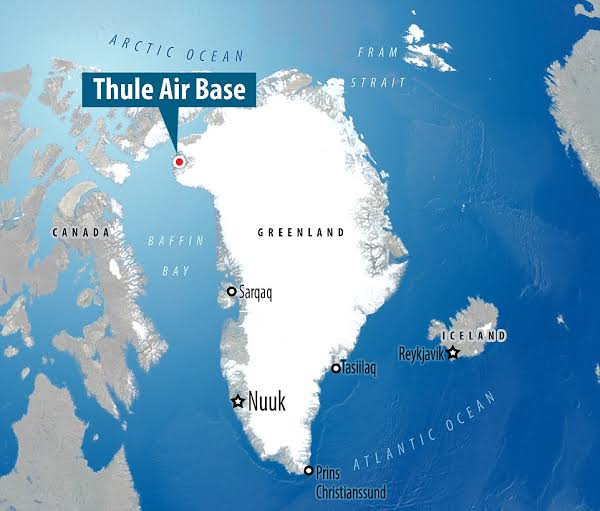
The base is now officially Pituffik Space Base, formerly Thule Air Base, a United States Space Force base on the northwest coast of Greenland in the Kingdom of Denmark.
I had come in with a group of other visitors. One woman was there to meet her husband. Another traveller had come to collect a relative who had died. I was there to see my son. We had shared a plane, and now we would share the dark, three people with three very different reasons for being on it. Nobody spoke about that.
The first thing to deal with was the paperwork. Before anyone could go anywhere, our stay permits and passports had to be validated by the American soldiers and the Danish liaison officer. We stood in the same line, handing over the same documents for three very different reasons.
A security briefing followed, in several steps. We were told how to get around the base, how to react if there was a fire, and what we should and should not do. After that, the police gave a briefing of their own. The room was a makeshift barracks turned into a meeting room, with bottles of water standing on the table. All of it was relaxed. Nobody raised their voice, and there was a lot of ordinary friendliness in the room. Underneath it ran a military structure, in the order of the steps, in the way everyone seemed to know their part, and in the sense that this was a routine that had been run many times before. Coffee was an option, we were told, but water was mandatory because the air is so dry that it is easy to dehydrate.
My son was waiting for me in the building next to arrivals. He was wearing black work clothes with a radio clipped on, and his beard had grown thick. He looked sporty and dedicated, a man who belonged in the place. He gave me a subtle nod. We hugged, hard, and it was so warming to see him again. I could see he was happy. It was good for the heart.
Then he showed me his life, and he was proud to do it. I could see it in the way he walked ahead of me and the way he explained things. He showed me where he worked, how the roads worked (many of them with full stop signs), where the different things were situated, and which parts were secret. I had travelled a long way to check on him, and it turned out he was the one who was at home. He could judge distances in the dark and I could not.
The drive out onto the range made the disorientation physical. The road was rows of snow-covered dirt, and ahead of us was a light in the distance. I could not tell what it was or how far away. It might have been a building a kilometre off or a vehicle ten kilometres away. There were no trees, no poles and nothing of a known size, so my eyes had nothing to measure against.
A fox ran across the road, and a moment later it was gone. I caught myself looking for muskoxen and not finding any. I thought about the polar bears, and about how the people who live here carry that risk through ordinary days. I had no answer, so I let the question sit.
The supermarket taught the same lesson on a smaller scale. There was very little to choose from. Meat was cheap, and vegetables were expensive, and the prices followed rules I did not know. I bought vegetables anyway. I stopped applying the prices I had brought from home and let the shelves fill the basket for me.
Something else struck me in the same days. I was told that here things are used and thrown away. Everything is mixed together and dug down in a garbage dump, which is very different from home, where we sort for recycling. I cannot help thinking about the bill we are building up for Greenland’s future, for the day the clean-up has to happen.
One day into my visit, and I have already lost most of my usual ways of steering: the sense of scale on the road, the choice at the shelf. Looking forward to whatever reaches me.
Leave a Reply