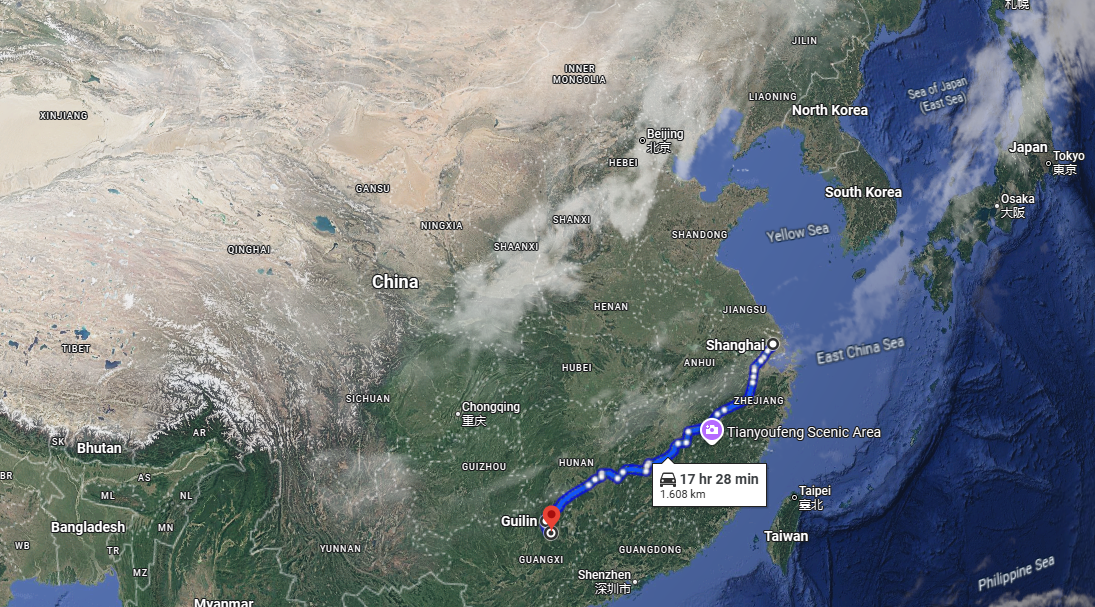
Before I travelled to China, my expectations were shaped by stories, headlines, and a distant idea of a country frozen somewhere between the past and the present. I imagined echoes of the Cultural Revolution still lingering in the streets, a place where the everyday life of ordinary people carried a sense of hardship and strict routines. I thought I would meet a China that had not yet outgrown the shadows of Mao, a China that felt old, worn, and slightly unsure of itself.
What I found instead was something completely different. China revealed itself as a country that has leapt into the future with astonishing speed, while still keeping one foot firmly rooted in thousands of years of history. Travelling through it, I often felt as if I were standing in two eras at once.
Hurdles You Should Be Ready For
Travel in China is rewarding, but there are two practical hurdles you should prepare for before you go. They are not impossible to overcome, but they will save you frustration if you understand them in advance.
- The language barrier, English is not widely spoken outside major hotels and tourist centers. Even simple conversations can become difficult once you step into local restaurants, railway stations, smaller shops, or the countryside. Equip yourself with reliable translation tools. A good offline translator is essential, because mobile reception is not guaranteed everywhere. It is worth practicing a few basic Chinese phrases, but technology will still be your daily companion. The more prepared you are, the smoother your experience becomes.
- Getting WeChat set up properly, WeChat is the central tool for everyday life in China. You use it for communication, for navigation, for booking services, and for paying almost everything. To make it work, you must register your passport and link a credit card. This part is usually straightforward. The real challenge comes when the app requires verification from a Chinese citizen. This is a security step that confirms you as a legitimate user. Without it, many features remain locked and you may not be able to complete payments. For many travellers, this verification becomes the biggest hurdle. You need someone with a local WeChat account who is willing to confirm you. It can be a friend, a colleague, or simply a helpful local who understands the process. Once the verification is done, the app becomes fully usable and suddenly the entire country opens itself to you. Street food, taxis, small shops, hotels, tickets, even buying fruit from a vendor all become effortless through a single app. I can recommend following the guide “How to Set Up WeChat Pay as a Foreigner” in ChatGPT

- Planning your trip in advance is crucial because China does not provide a clear guide to what you absolutely must see. You can often find a few gems through YouTube videos or travel blogs, but those are usually just small highlights and barely scratch the surface of the country’s vast opportunities. Before you go, it is worth deciding what you want to see and figuring out how to get there, otherwise you risk missing out on incredible experiences that are not widely advertised. Once you have WeChat Pay set up, transportation becomes effortless. Booking taxis through Didi, catching trains, and even paying for small purchases becomes simple and seamless. Apple Maps works surprisingly well, guiding you with clear directions, showing which trains to take, where to change lines, and even giving you prices. Using ticket vending machines for local trains or metros is straightforward. You just select your destination, the metro line, and the station nearest your goal. The machine calculates the fare automatically, and it is often incredibly cheap, sometimes around one euro for a two-hour train ride. Bullet trains are faster and more expensive, sometimes even costing as much as a flight, so planning ahead is essential to make the most of your time and budget. With a little preparation, navigating China’s transportation system is simple, affordable, and surprisingly efficient, allowing you to focus on exploring rather than worrying about logistics.
- Information wall, Installing a VPN on your computer and phone before travelling to China is essential because the internet there works very differently from what most of us are used to. Many familiar websites and apps, including Google services, Gmail, Facebook, Instagram, Twitter, and WhatsApp, are blocked. Once you arrive, it is very difficult, sometimes impossible, to download or subscribe to a VPN because the sites that provide them are themselves restricted. A VPN allows you to route your internet connection through servers outside China, giving you access to the tools and services you rely on every day. It also encrypts your connection, which helps protect sensitive information when using public Wi-Fi in airports, hotels, or cafes. Without a VPN already installed, you may find it frustrating or even impossible to maintain communication, access your email, work remotely, or use familiar social media, making it far more challenging to navigate and enjoy your trip. Installing it in advance ensures everything works smoothly as soon as you arrive, giving you both freedom online and peace of mind.
The impressions
The cities were my first surprise. I arrived expecting worn buildings and a sense of stagnation. Instead, I stepped into a world of ultramodern architecture, spotless subway stations, and technology that felt a step ahead of what I was used to at home. Mobile payment is everywhere. Public transport runs smoothly. The infrastructure is so efficient that you barely think about how far you are travelling. Everything simply works.
Yet the modernity never erases the past. In one moment you stand in front of a glass skyscraper, and in the next you find yourself walking through a narrow alley lined with traditional houses that seem unchanged for decades. Everywhere I went, history was right there below the surface. Ancient temples, quiet courtyards, old city walls, abandoned hotels from past dreams, forgotten stairways that once led to places full of life. China carries its past like a second heartbeat.
And then there is the nature. This was where China truly exceeded every expectation I ever had. The landscapes are nothing short of breathtaking. Travelling through the karst mountains around Guilin and Yangshuo felt like discovering a painting brought to life. Towering peaks, mist drifting between cliffs, winding rivers that carve their way through a green world that seems untouched by time. Every viewpoint felt like a place where legends could have been born.
Even the unexpected places impressed me. Caves illuminated by shifting colors. Ancient corridors carved by dripping water. Hidden rivers that flow silently through the heart of mountains. Bridges suspended between peaks. Roads so smooth and well kept that long journeys feel almost effortless.
What stayed with me most was the feeling of constant discovery. Every day revealed something new and surprising. People were curious, friendly, and eager to connect even when we barely shared a language. Food was abundant, varied, and full of flavors that I had never experienced before. And beneath all of it was the sense that China is still transforming, still moving, still building, but never forgetting where it came from.
My first impression of China was based on an idea shaped from afar. My real experience was shaped by standing on its streets, riding its trains, breathing its mountain air, and meeting the people who live there. It is a country that holds its history with pride, embraces the future with remarkable energy, and surrounds everything with natural wonders that seem to appear around every corner.
Travelling to China truly changed the way I see it. And if someone were to ask me today whether I recommend going, the answer would be simple.
Yes. Highly recommended.
Leave a Reply