Category: Data Management
-
The layer has a name: Ontology.
Traditional BI answers “𝗪𝗵𝗮𝘁 𝗵𝗮𝗽𝗽𝗲𝗻𝗲𝗱?” Semantic models answer “𝗛𝗼𝘄 𝘀𝗵𝗼𝘂𝗹𝗱 𝘁𝗵𝗲 𝗯𝘂𝘀𝗶𝗻𝗲𝘀𝘀 𝗺𝗲𝗮𝘀𝘂𝗿𝗲 𝗶𝘁?” Taxonomies answer “𝗪𝗵𝗮𝘁 𝗸𝗶𝗻𝗱 𝗼𝗳 𝘁𝗵𝗶𝗻𝗴 𝗶𝘀 𝘁𝗵𝗶𝘀?” Knowledge graphs answer “𝗪𝗵𝗮𝘁 𝗶𝘀 𝗮𝗰𝘁𝘂𝗮𝗹𝗹𝘆 𝗰𝗼𝗻𝗻𝗲𝗰𝘁𝗲𝗱, 𝗿𝗶𝗴𝗵𝘁 𝗻𝗼𝘄?” 𝗢𝗻𝘁𝗼𝗹𝗼𝗴𝗶𝗲𝘀 𝗮𝗻𝘀𝘄𝗲𝗿 “𝗛𝗼𝘄 𝗮𝗿𝗲 𝗮𝗹𝗹 𝗯𝘂𝘀𝗶𝗻𝗲𝘀𝘀 𝗰𝗼𝗻𝗰𝗲𝗽𝘁𝘀 𝗰𝗼𝗻𝗻𝗲𝗰𝘁𝗲𝗱?” Your AI agent doesn’t know what a customer is. It knows you have a table called…
-

Data Models: Conceptual vs Logical vs Physical
Every database starts as an idea. By the time it’s running in production, that idea has passed through three distinct stages, each one adding detail the last one didn’t have. Skipping straight to the last stage is how projects end up with schemas that technically work but don’t actually reflect how the business thinks. Understanding…
-
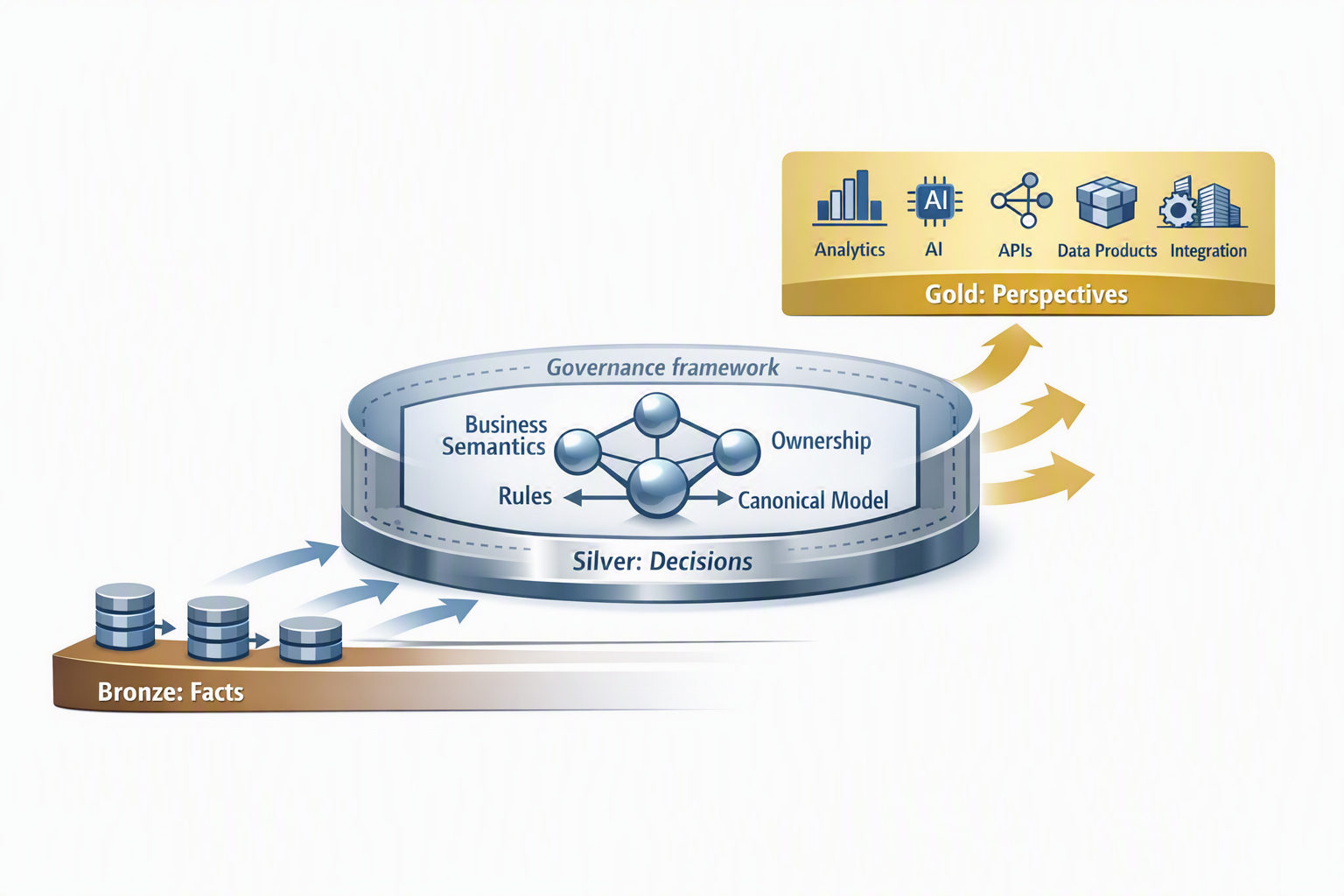
Your Silver Layer Is Not Missing Data. It Is Missing Decisions.
Most Silver layers are full of cleaned tables, standardised formats and automated transformations. But that is not where the real value sits. The real value of Silver is that it turns business decisions into reusable enterprise meaning. That is why a canonical model is not just a shared schema between applications. It is the organisation’s…
-

AI Governance: A Structural Perspective for Practitioners
As an architect, I’m watching a still-immature space, one where organisations are throwing themselves into AI faster than the structure around it can keep up. I keep seeing the same moment play out, usually right after something goes slightly wrong: who was supposed to be watching this? A chatbot gives a customer bad advice. A…
-
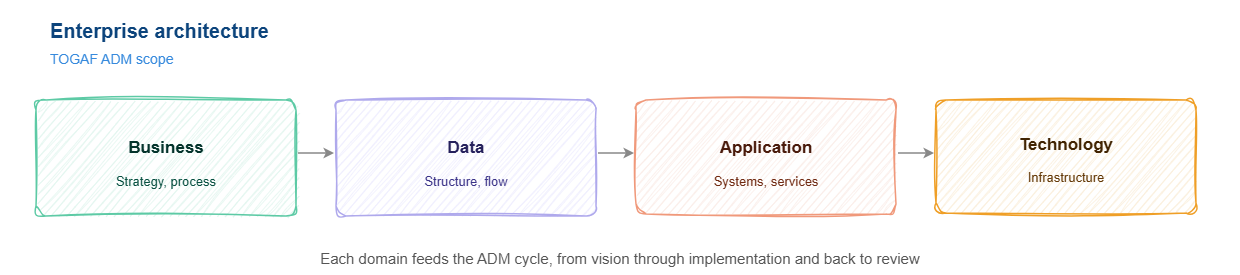
The Structure Behind Data-Driven Decisions
Every organisation that claims to be “data-driven” is really making a bet on a structure it rarely talks about: the data architecture. It’s the reason a dashboard shows the right number, the reason a report doesn’t break when a new product line launches, and the reason two teams looking at “revenue” actually mean the same…
-

Clear roles. Stronger governance. Better data.
Data governance often fails not because organizations lack policies or tools, but because nobody is quite sure who is supposed to do what. A data quality issue surfaces, and three teams point at each other. A new data product needs an owner, and the request stalls in email threads. A security exception is requested, and…
-

Where Medallion Architecture and Canonical Models Actually Meet
Medallion architecture has become the default mental model for organizing a data platform: land raw data in Bronze, clean and conform it in Silver, serve trusted, business-ready data from Gold. It’s simple, it’s intuitive, and it works, right up until three teams build three different “customer” tables and nobody can agree on the number in…
-

Distributed Attribute Ownership Specification – Template
What this describes: how ownership/responsibility for a single data attribute is distributed across multiple parties, and how that responsibility hands off as the attribute (or its governing lifecycle) moves through states. Fill in every ‹ › placeholder. Delete the guidance notes when done. 1. Identity Field Value Attribute ‹name of the attribute being governed› Type / shape ‹e.g.…
-
Data Contract – Template
How to use this. A data contract is an agreement between the people who produce a dataset and the people who consume it. It exists to replace assumption with accountability, not to generate paperwork. Fill the Minimum Viable Contract (sections 1–5) for every governed dataset. Add sections 6–9 only when the data’s scale, risk, or number of consumers…
-

From Data Responsibility to Trust
Let us get real. Most companies talk a big game about data platforms, self-service analytics, and unlocking the potential of data. Then complicated topics like PII enter the scene, creating chaos or prompting many to turn a blind eye to the problem. This is why the role of a data platform owner is critical. Without…