Category: Data Management
-
Critical Data Elements Are Still Not About Data: A Follow-Up
Where the dependency test for Critical Data Elements holds, where it strains, and what changes when AI becomes both a consumer and a producer of master data.
-

Rethinking Master Data Management for the Age of AI
AI is reshaping Master Data Management, from ontologies and data quality to intelligent agents and federated stewardship. The opportunity is to scale data work without surrendering business ownership, human decisions or control.
-
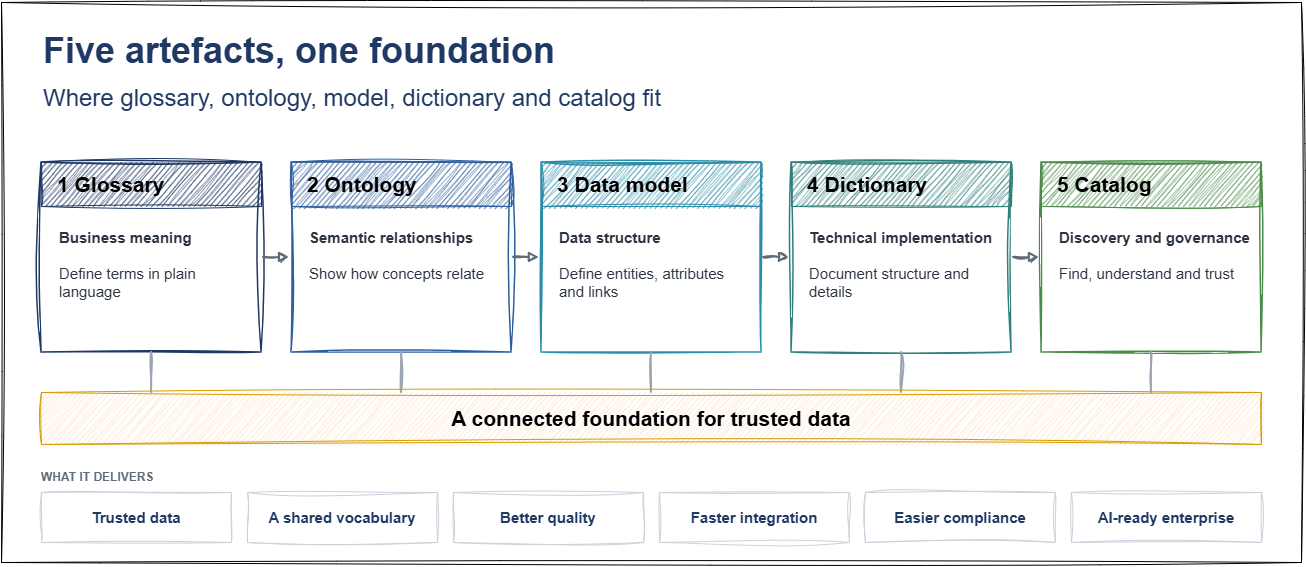
Five artefacts, one foundation: where glossary, ontology, model, dictionary and catalogue fit
A practical guide to the five metadata artefacts behind a coherent data foundation, clarifying their roles, ownership and feedback relationships across business meaning, models, implementation and discovery.
-
Why AI turns product data quality from a clean-up into a creation habit
One product record can get two verdicts on the same day. Purchasing reads description, base unit, supplier and lead time, finds all four filled and correct, and rates the record good. Costing reads description, standard cost and valuation class, finds standard cost empty and valuation class wrong, and rates the same record bad. Neither is…
-
Metacognition Applied to Master Data Management: Two Levels, Different Setting
I have a habit I’m slightly embarrassed by. Every so often, halfway through an argument, I stop and ask myself why I actually believe what I’m saying. More often than I’d like, the honest answer is “because everyone around me does”, or “because I read it somewhere once and it stuck”. It’s an unsettling question,…
-

Golden Records Are Beliefs, Not Mirrors
the real shift is from tracking whether our data is right to tracking whether we still know why. This blog post is a structured approach to epistemic governance in master data management, and why it matters more now that AI is doing the matching. It builds on the argument set out in Master Data as…
-
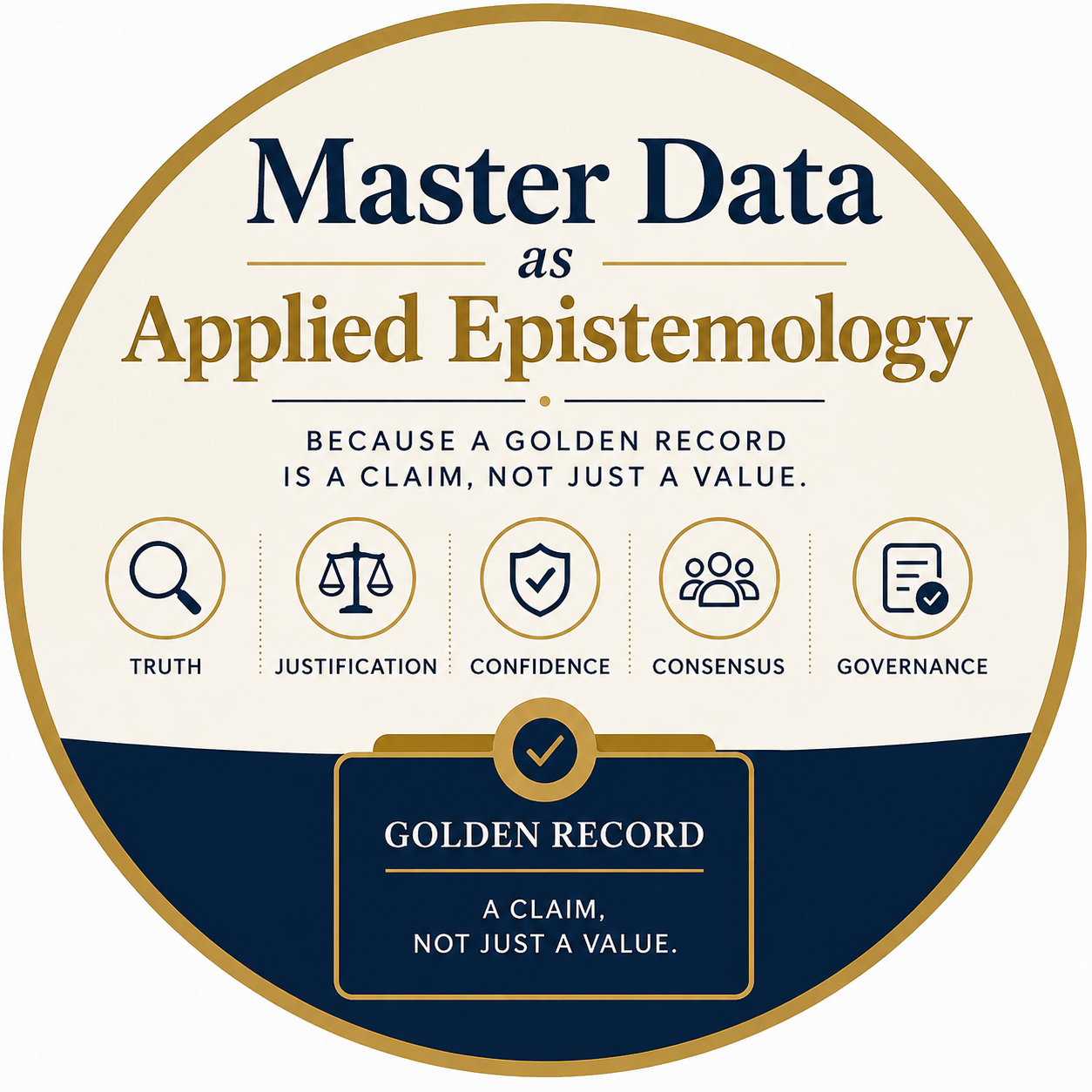
Master Data as Applied Epistemology
Two systems disagree about a customer’s address. A survivorship rule quietly picks one, and the workflow moves on. What happened there matters: understanding the quality of that decision requires understanding the philosophy behind it. This post runs dry, but that groundwork is necessary for building real understanding, architecture, and strategy. Why does that frame matter?…
-
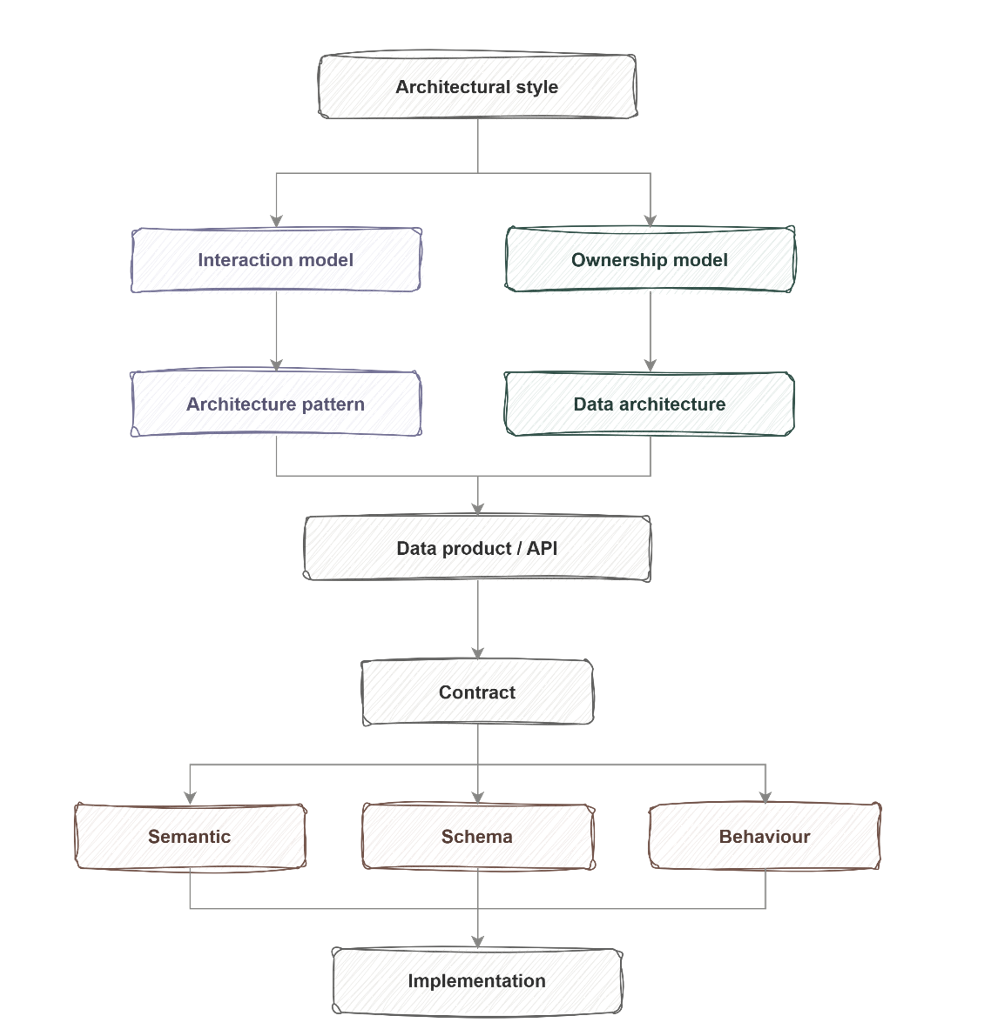
Data Architecture Patterns: Decisions for the AI Era
Lambda, Kappa, Medallion, Data Mesh, Data Lakehouse, and Semantic Architecture show up in almost every data architecture overview, usually as boxes with a one-line description each. That’s fine as a glossary, but it doesn’t tell you much about what happens once you build one. Here we go a layer deeper: for each pattern, we cover…
-

MDM Implementation Styles: Analytical vs. Operational
We rarely see Master Data Management programmes pick a single, fixed architecture on day one. Instead, most fall along a spectrum: from lightweight styles that support reporting and analytics, to heavier styles that put MDM directly in the path of live business transactions. Once you understand where a given implementation style sits on that spectrum,…
-

The Importance of Measuring Data Quality from a Process Perspective
When we talk about data quality, we default to a snapshot mindset: pull a sample, run some checks, score the dataset, move on. It is a useful habit, but it treats data quality as a property of a table rather than as the outcome of everything that happened before that table existed. Quality that holds…