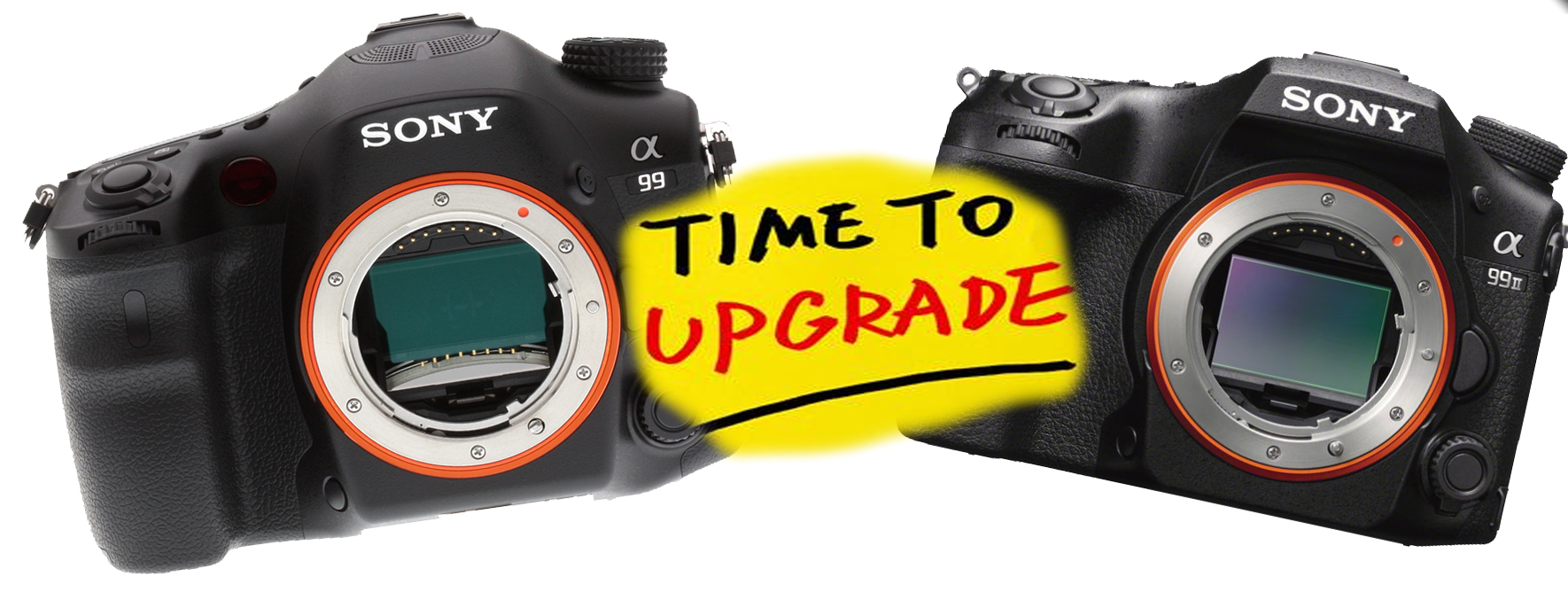
It is time to reflect on my move from the Sony Alpha A99V to the Alpha A99 II. Was it an extravagant upgrade or a sensible investment?
Any assessment is personal. We all value different features, depending on the way we photograph. I am not going to compare every specification line by line. Instead, I want to focus on the things that mattered to me in everyday use.
Taking delivery of the camera was exciting. On paper, the A99 II offered several features I had wanted for a long time. In some areas, expectations and reality matched; in others, the experience was more complicated.
What disappointed me
- Menus and controls: My first impression of the menu system and joystick was not positive. I found the menus slow to navigate and the joystick fiddly and imprecise. With time, I became more familiar with the controls, and the experience improved, but the initial frustration was real.
- High-speed shooting: I did not often use the highest burst rate, but when I did, clearing the buffer could interrupt the workflow. Performance depends on the card, file format and shooting settings, so the experience is not identical in every configuration.
- Battery life and GPS: Battery life was manageable, but I missed the built-in GPS of the A99V. Replacing it with a phone-based location workflow was not an improvement for the way I worked.
What I loved
The A99 II is an excellent camera for landscape photography. Its 42.4-megapixel full-frame sensor gives plenty of detail, and I was impressed by its low-light performance. Combined with good glass, it produced files that gave me considerable freedom in post-processing.
I also appreciated the improved continuous shooting performance. The camera felt responsive in situations where I needed to capture a sequence, and the autofocus system represented a significant step forward from the A99V for many types of subject.
I also noticed less sensor dust during my own use, although that is an observation rather than a controlled comparison.
Conclusion
From the outside, the A99 II looks similar to its predecessor, but it is a substantially different camera. The higher-resolution sensor, improved autofocus and faster shooting make it a meaningful upgrade.
It was also an expensive upgrade. Looking back, I am not entirely convinced that changing from the A99V was the best use of the money. I might have gained more by investing in better lenses. That does not make the A99 II a poor camera; it simply reflects the fact that the value of an upgrade depends on what you need from it.
For me, it was a capable and enjoyable camera, but the decision was not as straightforward as the specification sheet suggested.
Historical note: This is a personal review of the Sony Alpha A99 II as used in 2018. It is not a comparison with current camera systems.
Leave a Reply