| If sharpness is your main priority, a modern 85mm lens is probably a better choice. If you are looking for distinctive portrait rendering and unusual bokeh, however, the Helios-40 family may offer something special. |
Return to Part 1 or continue to Part 3.
In this second instalment, I look more closely at the different versions of the Soviet Helios-40 and Helios-40-2 85mm f/1.5 lenses, including the M42-mount models.

What is it?
This lens, in the M42 mount, is called Helios (occasionally called Gelios by the Russians and Ukrainians). It was compatible with screw-mount cameras made by Pentax, Yashica, Praktica, Soviet Zenit, and other manufacturers whose cameras have the native M42 mount.
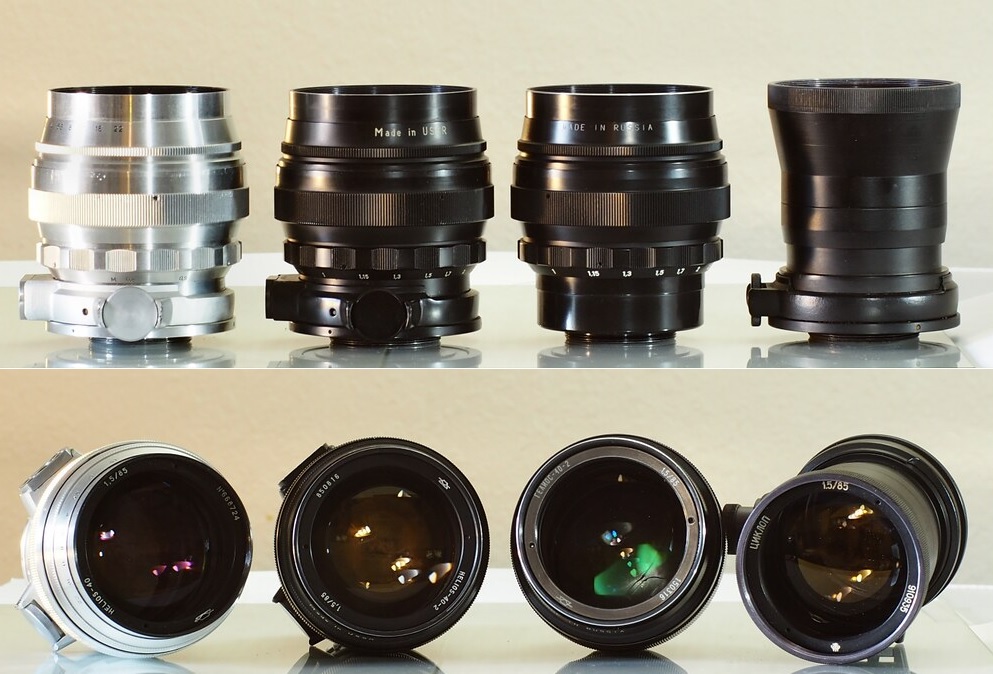
Four versions, with slight variations
The versions share the same broad optical concept, but there are mechanical differences between them. Aperture-blade count and shape can vary by version, so check the exact lens rather than assuming every example behaves identically.

1) My version, the Helios-40, is recognisable by its silver aluminium finish and tripod mount. The filter thread is an unusual 66mm size. The preset aperture arrangement uses separate rings for selecting and setting the aperture, which takes some getting used to. Focusing is controlled by the scalloped ring towards the rear of the lens.
2) The Helios-40 “B” is similar to the earlier version but has a rotating tripod collar secured by a thumbscrew. This makes it easier to position the camera when the lens is mounted on a tripod.
3) The Helios-40-2 is commonly found in a black finish and M42 mount, with differences in minimum focusing distance and filter size compared with earlier versions. Coating and construction can vary, so inspect the exact lens before buying.
4) The Helios-40-2 export version is often identified by its Latin-character markings. There may be other production differences, so do not assume the lettering is the only distinction.
Historical note: These descriptions are based on the versions I encountered and on information available when I wrote this series. Production variations exist, and vintage lenses should be checked individually for mount, condition, filter thread and optical alignment.
Leave a Reply