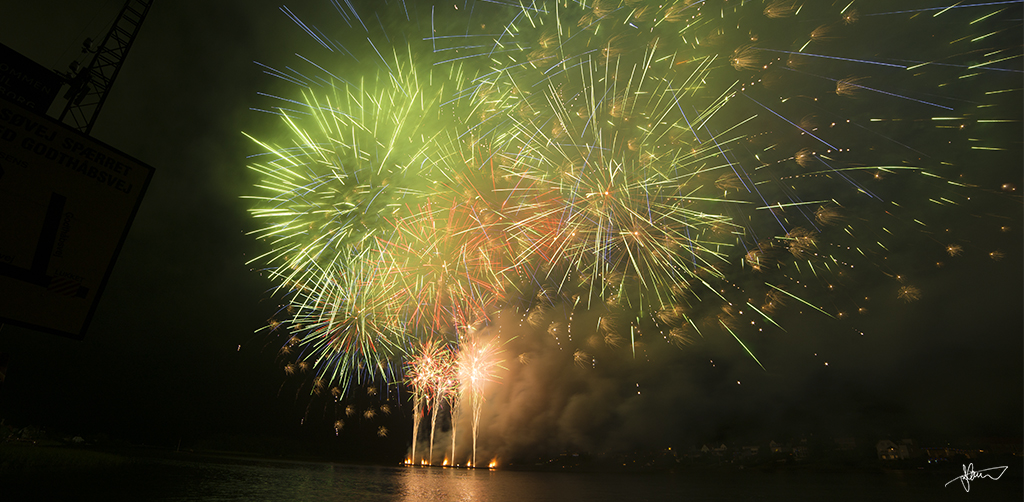
These photographs are from the spectacular show by Pirotecnia Zaragozana, led by Miguel Pérez Nevela, which won the European Fireworks Contest at the Silkeborg Ildfest Regatta in 2017.
Prepare
Make sure your batteries are fully charged. Cold weather can reduce battery performance, and you may take hundreds of frames during a display. Bring a memory card with plenty of space, a sturdy tripod and a remote release or intervalometer.
I like to arrive early, find a safe position with a clear view of the display and consider the likely height and distance of the fireworks. Focus manually on a distant subject at a similar distance, then check focus with a test frame. Do not rely on the lens’s infinity mark without checking it.

Check the weather as well. An umbrella or rain cover can protect you and the equipment, and a clean microfibre cloth is useful if moisture reaches the front of the lens. Keep the camera protected without obstructing ventilation or creating a trip hazard.

Choose your position
Firework displays are designed to be viewed from particular directions. Look for a position with a clear view of the launch area and enough space to set up without obstructing other people. Smoke can obscure the display, so wind direction matters. Avoid pointing the camera towards bright streetlights or other sources of light that may reduce contrast.

Be considerate of the people around you. Keep tripod legs close, make sure nobody can trip over them and do not block the view of other spectators. A friend can help keep an eye on the equipment, but never create a barrier or put anyone in an unsafe position.

Exposure and technique
There is no single exposure that works for every display. I usually experiment with shutter speeds between one and five seconds, depending on how much of the firework trail I want to capture. ISO 100–200 is a useful starting point, while an aperture around f/5.6 to f/10 can help control the brightness of the bursts. Adjust after reviewing the first few frames.
A fast lens is not essential. Stopping down can help prevent bright fireworks from becoming overexposed, particularly when several bursts overlap. Use manual exposure so that the camera does not change settings in response to each flash.

Fireworks photography is a mixture of preparation and timing. Take a few test frames, watch how the display develops and adjust your exposure as necessary. Most importantly, enjoy the show rather than spending the entire evening looking at the back of the camera.
Historical note: These settings are starting points from my 2017 experience, not a universal recipe.
Leave a Reply